Table Of Content
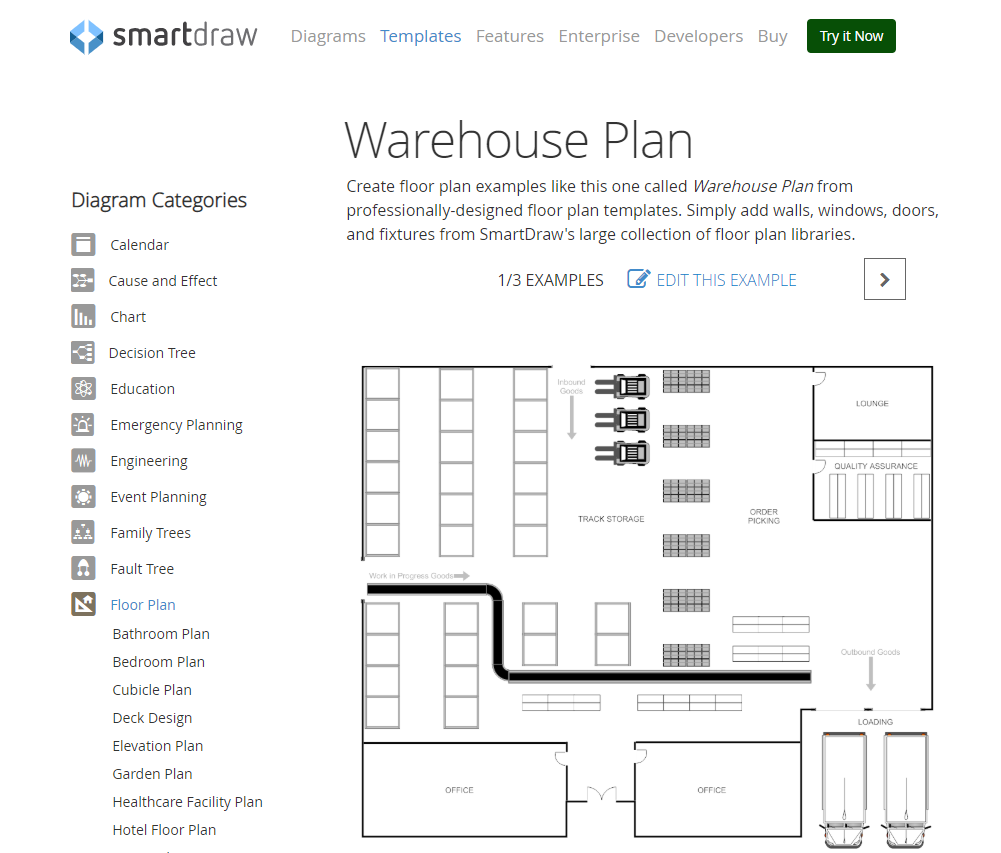
The right warehouse layout design aims to optimize operations while reducing the chances of bottlenecks or errors. Now, you need to establish inventory control best practices for your warehouse staff to follow. From improving space utilization to dispatching incoming customer orders quickly, this cost efficient solution can boost operational efficiency in numerous ways.
Guide to TikTok Fulfillment in 2024: Fulfill With TikTok Shop
As sustainability becomes a priority, integrate eco-friendly practices into your warehouse layout. Implement energy-efficient lighting, consider solar panels, and explore recycled materials for construction. Sustainable practices not only benefit the environment but also contribute to long-term cost savings. Automated Guided Vehicles, or AGVs, roll onto the warehouse floor as beacons of precision on wheels. AGVs navigate through the layout, optimizing material flow and reducing the need for manual handling. Drones ascend as aerial virtuosos, offering a unique perspective on warehouse operations.
Need Help With Order Fulfillment? ShipBob Can Help.
Mezzanines are elevated platforms constructed between the floor and ceiling, providing additional storage areas. This approach is especially beneficial for items with lower turnover rates or those requiring specialized storage conditions. In warehouses deploying narrow aisle trucks, the aisle width can be reduced to as little as 8 to 10 feet. These specialized trucks, such as reach trucks and order pickers, are designed for precision in confined spaces. Identify seasonal trends, fluctuations, and any other factors that influence the movement of products.
Step 1: Comprehensive Inventory Assessment
A prerequisite to building out effective pick routes is to understand (and design) the natural flow of a warehouse. Lastly, by having similar products stored together, you can expose customers to more of your product range and thus increase sales. Furthermore, having an organizational strategy in place streamlines the picking process.
The warehouse layout becomes a canvas where each technology contributes a note, each process a melody, and the overall composition—an anthem of progress in the logistics landscape. As we navigate through the intricate steps of warehouse design, Step 9 takes center stage – Flexibility for Future Changes. In the ever-evolving landscape of logistics, designing a warehouse layout with adaptability in mind becomes imperative. This step is dedicated to instilling the essence of flexibility, ensuring that the warehouse can seamlessly adapt to changes in inventory volume, operational processes, and emerging industry trends.
Designate Essential Warehouse Setup Areas
Safety Prioritization is not just a step; it’s a commitment to the well-being and security of the workforce. This commitment to safety extends beyond compliance; it becomes a cultural norm, embedding a proactive approach that safeguards both personnel and operational integrity. As we delve into the comprehensive process of warehouse design, Step 8 emerges as a cornerstone – Safety Prioritization. In any operational environment, safety is non-negotiable, and within the dynamic setting of a warehouse, it takes precedence. This step is dedicated to fostering a secure working environment, mitigating risks, and prioritizing the well-being of the workforce.
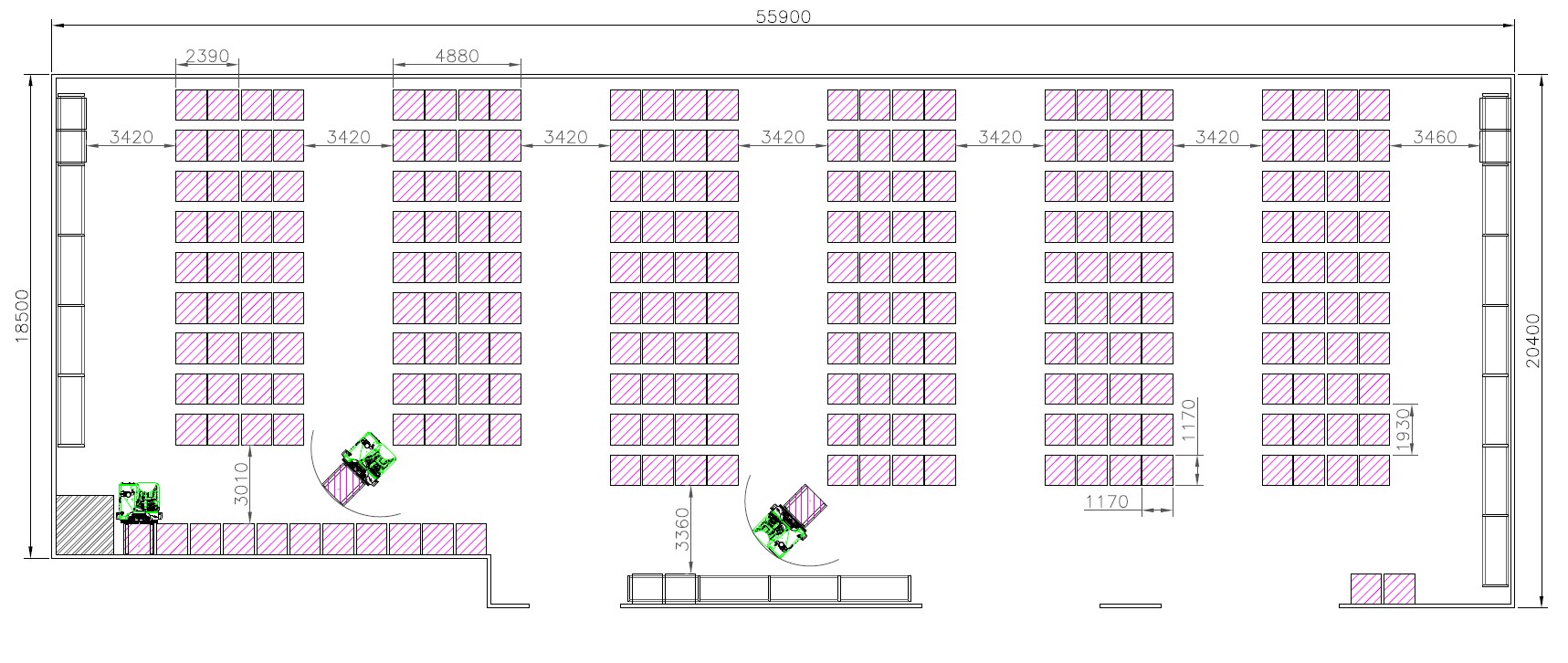
To ensure the safety and health of your warehouse workers, it is essential to use ergonomic equipment and techniques whenever possible. Just make sure you couple this strategy with a robust inventory management platform like SkuVault Core or Linnworks. That way, you’re not trying to manage all of these product classifications in a spreadsheet, or worse, in your head. By providing your workers with detailed maps and pick routes, you will not only save time but also ensure that orders are fulfilled accurately and efficiently. Additionally, wider aisles can help to improve visibility and reduce congestion in your warehouse.
This strategic use of vertical space can lead to substantial cost savings in the long run. The vertical space within a warehouse is a valuable and often underexplored resource. By thinking beyond traditional horizontal storage, facilities can significantly expand their storage capacity without the need for physical expansion. This is particularly critical in environments where land availability is limited or where expansion costs are prohibitive. Utilize Warehouse Management Systems (WMS) to analyze data and optimize aisle width based on real-time factors.
Storage area (C)
Diagonal cross-aisles in unit load warehouses to increase handling performance - ScienceDirect.com
Diagonal cross-aisles in unit load warehouses to increase handling performance.
Posted: Fri, 23 Aug 2019 09:21:27 GMT [source]
As we delve into the intricacies of warehouse design, Step 6 places a strategic focus on Workflow Efficiency Design. This step involves a meticulous mapping of the workflow within the warehouse, encompassing every stage from receiving to storage, order picking, and finally, shipping. The primary objective is to design a layout that minimizes bottlenecks and optimizes the seamless flow of goods through the entire operational process. By aligning storage zones with demand patterns and storage compatibility, overall operational efficiency is improved. The strategic organization of products contributes to a smoother workflow and streamlined warehouse processes. Consider the demand patterns for different products when defining storage zones.
Warehouse layout and design are critical components of efficient supply chain management. A warehouse’s strategic arrangement of space, equipment, and processes directly impacts operational efficiency, order fulfillment speed, and overall cost-effectiveness. A well-designed warehouse layout can help streamline the picking and packing operations.
When this type of loading area is created, it is advisable for the warehouse floor to be above the level of where the trucks drive. Loading and unloading areas can also be designed in which trucks are driven into a pit. However, movement and operations are faster if the warehouse is at a higher level instead. L-shaped designs are the last on our list, but still a good warehouse layout. When designing this warehouse, it’s best if each leg of the L is roughly the same length. This makes it much easier to create a good flow throughout the warehouse and for forklifts and employees not to get trapped funneling through the 90-degree angles in the warehouse.
The L-shaped flow and I-shaped flow are relatively similar in their advantages. RFID (radio-frequency identification) or barcoding systems are invaluable tools for tracking products in your warehouse. If you store hazardous materials in your warehouse, you must ensure that they are stored safely and securely. You could also use color-coded labels to indicate the shelf life of products and expiration dates.
Designing warehouses with flexibility in mind ensures that vertical space utilization can adapt to evolving business needs. Modular and scalable solutions allow for adjustments in storage configurations, supporting the agility required in a dynamic marketplace. Periodic assessments and adjustments to aisle width configurations allow the facility to adapt to changes in inventory, operational processes, and technological advancements in material handling.
This type of warehouse floor plan has the loading and unloading area and shipping area at both ends, with storage space designated in the middle. When planning your warehouse layout, the size and type of storage, shelving, and workspace equipment all come into play. Common warehouse solutions include pallet racks, heavy- and light-duty shelving, cantilever racks, and bins. The I-shape takes advantage of the two ends of the warehouse layout and uses them as the loading and unloading areas. The longer center section of the I is used as the picking, packing, and receiving areas as well as general storage areas providing ample space for the warehouse. The U-shaped design is easily one of the most efficient warehouse layout and easy designs to visualize.
Optimizing your warehouse architecture enables you to arrange and keep more in-demand commodities, which results in on-time order fulfilment and satisfied customers. You can decide the workstations and traffic patterns by implementing the ideal flow strategy for your warehouse. A more efficient traffic flow between the various departments can be established by designing each warehouse area per your needs.
But the primary purpose of the warehouse is to utilize the space and get a smooth flow of the inventory. Here are some practical ways to design an ideal warehouse layout that is just right for your or your client's business. Your warehouse layout should take several factors into account, such as ABC inventory, operational safety, rack labeling strategy, and emergency exits.


No comments:
Post a Comment